
April 12, 2024
Antimicrobial resistance is an increasingly serious threat for public health, and the use of antimicrobials in livestock feed has been a major contributing factor in the emergence and spread of antimicrobial resistance to many drugs, according to the U.S. National Institutes of Health. Led by Erika Ganda, assistant professor of food animal microbiomes, a Penn State research team conducted a study of natural feed additives that are promising alternatives to substitute for antimicrobial growth promoters.

April 12, 2024
Communities are sustainable and equitable when residents play a meaningful role in the deliberations, discussions, decision-making and implementation of projects or programs affecting them, according to Penn State Extension educators, who will host a webinar addressing community engagement, capacity building and equitable development.
April 12, 2024
Penn State’s College of Agricultural Sciences recently honored three of its alumni with 2024 Outstanding Alumni Awards: Vijay Nandula, Shah Chowdhury and Hunter Swisher.

April 12, 2024
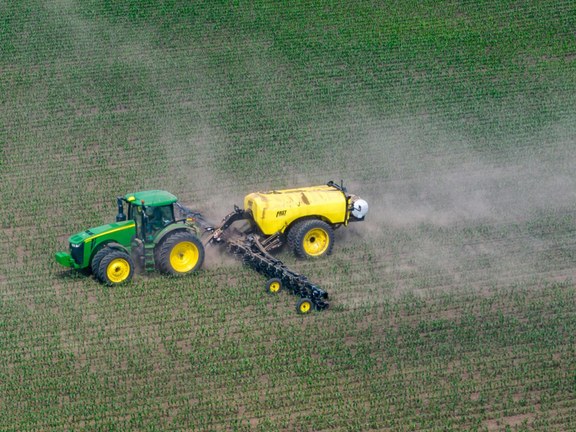
A nationwide team of agricultural scientists, including researchers at Penn State, has launched a decision aid that provides an unbiased, science-based interpretation of soil test phosphorus and potassium values for crop fertilization, with an eye toward potentially saving farmers millions of dollars annually while reducing excess nutrient losses to the environment.
April 11, 2024
The Penn State Museum Consortium will hold the spring 2024 "Night at the Museums" on April 25. Participating museums on the University Park campus will be open from 4 to 8 p.m. This is a chance for students, staff, faculty and the community to visit a variety of unique and interesting museums across campus. Admittance to the museums is free and open to the public.

April 11, 2024
After graduating from Penn State’s College of Agricultural Sciences in 2021 with a bachelor’s degree in community, environment and development, and minors in international agriculture and anthropology, Gillian Warner opened Warner Equine out of Tadpole Lane Farm in Pennsylvania Furnace in 2022.
April 11, 2024
A team led by Penn State researchers published the first documentation of arthropods that visited yellow-eyed grasses in Guyana, a South American country where species of the plant are most diverse.

April 11, 2024
Sarah Beaver could have opted for a beach getaway for spring break. Instead, the first-year student in Penn State’s College of Agricultural Sciences dedicated her time to imparting lessons on global citizenship to high school students in Houston, Texas.

April 10, 2024
Penn State undergraduates Nate Carey, Bridget Reheard and Mabel Tong have earned the 2024 Goldwater Scholarship, a national award that recognizes undergraduates who show exceptional potential as leaders.

April 8, 2024
During its annual meeting on April 3, the Penn State chapter of Gamma Sigma Delta, the agricultural honor society, honored faculty and students from the College of Agricultural Sciences.

April 5, 2024
The size of an individual snack piece not only influences how fast a person eats it, but also how much of it they eat, according to a new study led by researchers at Penn State. With nearly a quarter of daily calorie intake in the United States coming from snacks, these findings may have implications for helping people better understand how eating behavior impacts calorie and sodium intake.

April 4, 2024
Forty Penn State graduate students were named recipients of Penn State’s most prestigious annual graduate student recognition awards, administered by the Graduate School in collaboration with several Penn State units.

April 3, 2024
Forty Penn State graduate students were named recipients of Penn State’s most prestigious annual graduate student recognition awards, administered by the Graduate School in collaboration with several Penn State units.

April 2, 2024
As part of our regular “We Are!” feature, we recognize 13 Penn Staters who have gone above and beyond what’s asked of them in their work at the University.

April 2, 2024
Graduate students in Penn State’s College of Agricultural Sciences were lauded for their achievements during the 2024 Graduate Student Award Celebration, hosted by the Office for Research and Graduate Education and held March 20 on the University Park campus.

April 2, 2024
Upper-level Penn State architecture students in a directed research studio with Lisa Iulo, associate professor and director of the Hamer Center for Community Design in the Stuckeman School, worked collaboratively with the community in Warren, Pennsylvania, last semester to co-design solutions for the city's waterfront and business district.

April 1, 2024
The 22nd annual Penn State Equine Science Showcase and Quarter Horse Sale kicks off April 27 in the Snider Agricultural Arena at the University Park campus.

March 28, 2024
Bovine tuberculosis (TB) is a livestock disease that results in large economic losses to animal agriculture worldwide. The disease can also transmit to humans and cause severe illness and death. Researchers from Penn State, Addis Ababa University and the University of Cambridge have now demonstrated that a vaccine for TB currently used in humans significantly reduces infectiousness of vaccinated livestock, improving prospects for elimination and control. The study published today (March 28) in the journal Science.

March 28, 2024
U.S. companies actively engaged in creating innovative products or processes are more likely to expand into international markets, according to a new study led by Penn State researchers. The findings, which apply to both rural and urban companies, could inform efforts aimed at boosting U.S. exports.

March 27, 2024
Graduate students Aditya Sapra, Auja Bywater and Paul DiStefano received awards in Penn State’s first "Three Minute Thesis" competition, hosted by the Graduate School. The event featured 11 competitors from nine graduate programs, and all presentations are available to watch online.

March 26, 2024
Interested in learning to grow the food your family eats? Penn State Extension Master Gardeners offer a comprehensive gardening program called “Seed to Supper,” aimed at helping novice, adult gardeners learn how to successfully grow a portion of their own food on a limited budget.

March 26, 2024
David Hughes, Dorothy Foehr Huck and J. Lloyd Huck Chair in Global Food Security and professor of entomology in the College of Agricultural Sciences and biology in the Eberly College of Science, is the recipient of the 2024 W. LaMarr Kopp International Faculty Achievement Award. The award recognizes faculty members who have contributed significantly to the advancement of the international mission of the University.

March 26, 2024
For third-year Penn State student Cheyenne Bastian-Brown, advocacy for the agriculture industry has become more than a passion. It’s now her professional path. Leveraging her background combined with opportunities and experiences made possible through Penn State — including her role as the 2024 Pennsylvania State Honey Queen — Bastian-Brown is committed to helping the public understand the importance of agriculture in their daily lives and to helping advance agricultural education.

March 26, 2024
The Department of Animal Science in Penn State’s College of Agricultural Sciences has named Daniel Loy, of Ames, Iowa, its 2024 Animal Science Distinguished Alumnus.

March 21, 2024
For Penn State Extension Master Watershed Steward Robert Pace, building community partnerships and working with other program volunteers as a team have been essential for contributing to successful projects in Montgomery County.

March 21, 2024
Community Environment and Development 497: Community-Engaged Learning with Pennsylvania Farmworkers is an out-of-the-classroom, community-engaged course offered by Penn State’s College of Agricultural Sciences. This year, the course will include a new farmworker and animal health component.
March 19, 2024
Penn State Berkey Creamery is a contender in the “2024 Coolest Thing Made in PA” contest, sponsored by the Pennsylvania Chamber of Business and Industry.

March 19, 2024
The Dennis and Janet Scanlon Integrated Team Research Award will recognize an integrated research and outreach faculty team within the College of Agricultural Sciences that demonstrates innovation in translating research to be shared and used through activities leading to partnerships and collaboration within the college and beyond.
March 19, 2024
As climate change worsens global drought conditions, hindering crop production, the search for ways to capture and store atmospheric carbon causing the phenomenon has intensified. Penn State researchers have developed a new high-tech tool that could spur changes in how crops withstand drought, acquire nitrogen and store carbon deeper in soil.
March 19, 2024
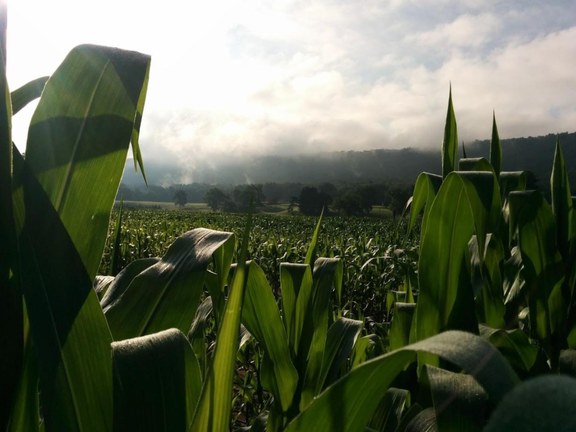
In 2023, 33 people died of injuries suffered in farm-related incidents in Pennsylvania, according to farm-safety specialists in Penn State’s College of Agricultural Sciences, who emphasized the need for education and policies to reduce risk for workers and farm-family members. To help identify hazards and risks associated with production, Penn State Extension’s Agricultural Safety and Health team produces annual summaries of Pennsylvania’s farm fatalities. The team recently released the “2023 Pennsylvania Farm Fatal Injury Summary.”

