
April 18, 2024
Six Penn State faculty members in areas ranging from neuropharmacology to computer architecture have been elected to the 2023 cohort of fellows of the American Association for the Advancement of Science (AAAS), the world’s largest general scientific society. This year, AAAS recognized a total of 502 scientists, engineers and innovators with this lifetime honor, bestowed by their peers, for their scientifically and socially distinguished achievements.

April 18, 2024
Penn State students’ entrepreneurial spirit shone brightly at the 2024 Ag Springboard student business pitch contest, which took place in early April in State College. Taking home this year’s first-place award was the team that created CropNSoil, a platform to support international multicropping. Students Kanika Gupta and Kartikey Pandey, both computer science majors in the College of Engineering, and Samuel DeLozier, an agribusiness management major in the College of Agricultural Sciences, received $7,500 to further their project.

April 18, 2024
Penn State Climate Consortium announced 11 workshops designed to create and implement climate change solutions through its Climate Solutions Accelerator program.

April 17, 2024
As part of our regular “We Are!” feature, we recognize 13 Penn Staters who have gone above and beyond what’s asked of them in their work at the University.

April 17, 2024
A new study highlights the effects climate change may have on children and social support systems in Africa, a question that has received relatively little attention from researchers and the policy community.

April 16, 2024
An agricultural engineer in Penn State’s College of Agricultural Sciences is embarking on research to explore using plant-based materials for 3D printing, thanks to support from the U.S. National Science Foundation.

April 16, 2024
Individuals working in agricultural conservation can dive into professional development opportunities by attending the “ACAP Ag Conservation Con,” June 4-6 at Toftrees Golf Resort, located at 1 Country Club Lane in State College.

April 16, 2024
High-tunnel growing systems, sometimes called hoophouses, have gained popularity for their ability to enhance growth conditions and extend the growing season of horticultural crops. Now, a team led by Penn State researchers has demonstrated that growers can select various plastic film coverings on the structures — depending on their desired light-filtering properties — to protect plants and enhance their health.

April 12, 2024
Antimicrobial resistance is an increasingly serious threat for public health, and the use of antimicrobials in livestock feed has been a major contributing factor in the emergence and spread of antimicrobial resistance to many drugs, according to the U.S. National Institutes of Health. Led by Erika Ganda, assistant professor of food animal microbiomes, a Penn State research team conducted a study of natural feed additives that are promising alternatives to substitute for antimicrobial growth promoters.

April 12, 2024
Communities are sustainable and equitable when residents play a meaningful role in the deliberations, discussions, decision-making and implementation of projects or programs affecting them, according to Penn State Extension educators, who will host a webinar addressing community engagement, capacity building and equitable development.
April 12, 2024
Penn State’s College of Agricultural Sciences recently honored three of its alumni with 2024 Outstanding Alumni Awards: Vijay Nandula, Shah Chowdhury and Hunter Swisher.

April 12, 2024
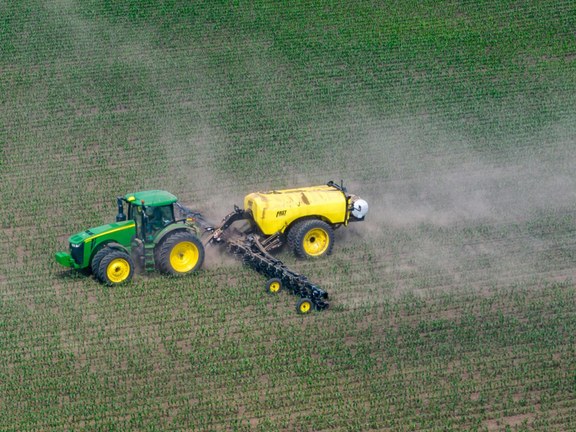
A nationwide team of agricultural scientists, including researchers at Penn State, has launched a decision aid that provides an unbiased, science-based interpretation of soil test phosphorus and potassium values for crop fertilization, with an eye toward potentially saving farmers millions of dollars annually while reducing excess nutrient losses to the environment.
April 11, 2024
The Penn State Museum Consortium will hold the spring 2024 "Night at the Museums" on April 25. Participating museums on the University Park campus will be open from 4 to 8 p.m. This is a chance for students, staff, faculty and the community to visit a variety of unique and interesting museums across campus. Admittance to the museums is free and open to the public.

April 11, 2024
After graduating from Penn State’s College of Agricultural Sciences in 2021 with a bachelor’s degree in community, environment and development, and minors in international agriculture and anthropology, Gillian Warner opened Warner Equine out of Tadpole Lane Farm in Pennsylvania Furnace in 2022.
April 11, 2024
A team led by Penn State researchers published the first documentation of arthropods that visited yellow-eyed grasses in Guyana, a South American country where species of the plant are most diverse.

April 11, 2024
Sarah Beaver could have opted for a beach getaway for spring break. Instead, the first-year student in Penn State’s College of Agricultural Sciences dedicated her time to imparting lessons on global citizenship to high school students in Houston, Texas.

April 10, 2024
Penn State undergraduates Nate Carey, Bridget Reheard and Mabel Tong have earned the 2024 Goldwater Scholarship, a national award that recognizes undergraduates who show exceptional potential as leaders.

April 8, 2024
During its annual meeting on April 3, the Penn State chapter of Gamma Sigma Delta, the agricultural honor society, honored faculty and students from the College of Agricultural Sciences.

April 5, 2024
The size of an individual snack piece not only influences how fast a person eats it, but also how much of it they eat, according to a new study led by researchers at Penn State. With nearly a quarter of daily calorie intake in the United States coming from snacks, these findings may have implications for helping people better understand how eating behavior impacts calorie and sodium intake.

April 4, 2024
Forty Penn State graduate students were named recipients of Penn State’s most prestigious annual graduate student recognition awards, administered by the Graduate School in collaboration with several Penn State units.

April 3, 2024
Forty Penn State graduate students were named recipients of Penn State’s most prestigious annual graduate student recognition awards, administered by the Graduate School in collaboration with several Penn State units.

April 2, 2024
As part of our regular “We Are!” feature, we recognize 13 Penn Staters who have gone above and beyond what’s asked of them in their work at the University.

April 2, 2024
Graduate students in Penn State’s College of Agricultural Sciences were lauded for their achievements during the 2024 Graduate Student Award Celebration, hosted by the Office for Research and Graduate Education and held March 20 on the University Park campus.

April 2, 2024
Upper-level Penn State architecture students in a directed research studio with Lisa Iulo, associate professor and director of the Hamer Center for Community Design in the Stuckeman School, worked collaboratively with the community in Warren, Pennsylvania, last semester to co-design solutions for the city's waterfront and business district.

April 1, 2024
The 22nd annual Penn State Equine Science Showcase and Quarter Horse Sale kicks off April 27 in the Snider Agricultural Arena at the University Park campus.

March 28, 2024
Bovine tuberculosis (TB) is a livestock disease that results in large economic losses to animal agriculture worldwide. The disease can also transmit to humans and cause severe illness and death. Researchers from Penn State, Addis Ababa University and the University of Cambridge have now demonstrated that a vaccine for TB currently used in humans significantly reduces infectiousness of vaccinated livestock, improving prospects for elimination and control. The study published today (March 28) in the journal Science.

March 28, 2024
U.S. companies actively engaged in creating innovative products or processes are more likely to expand into international markets, according to a new study led by Penn State researchers. The findings, which apply to both rural and urban companies, could inform efforts aimed at boosting U.S. exports.

March 27, 2024
Graduate students Aditya Sapra, Auja Bywater and Paul DiStefano received awards in Penn State’s first "Three Minute Thesis" competition, hosted by the Graduate School. The event featured 11 competitors from nine graduate programs, and all presentations are available to watch online.

March 26, 2024
Interested in learning to grow the food your family eats? Penn State Extension Master Gardeners offer a comprehensive gardening program called “Seed to Supper,” aimed at helping novice, adult gardeners learn how to successfully grow a portion of their own food on a limited budget.

March 26, 2024
David Hughes, Dorothy Foehr Huck and J. Lloyd Huck Chair in Global Food Security and professor of entomology in the College of Agricultural Sciences and biology in the Eberly College of Science, is the recipient of the 2024 W. LaMarr Kopp International Faculty Achievement Award. The award recognizes faculty members who have contributed significantly to the advancement of the international mission of the University.

